Resources/How Is AI Changing Nursing Practice? NCSBN Launches New Research With Duke University
How Is AI Changing Nursing Practice? NCSBN Launches New Research With Duke University
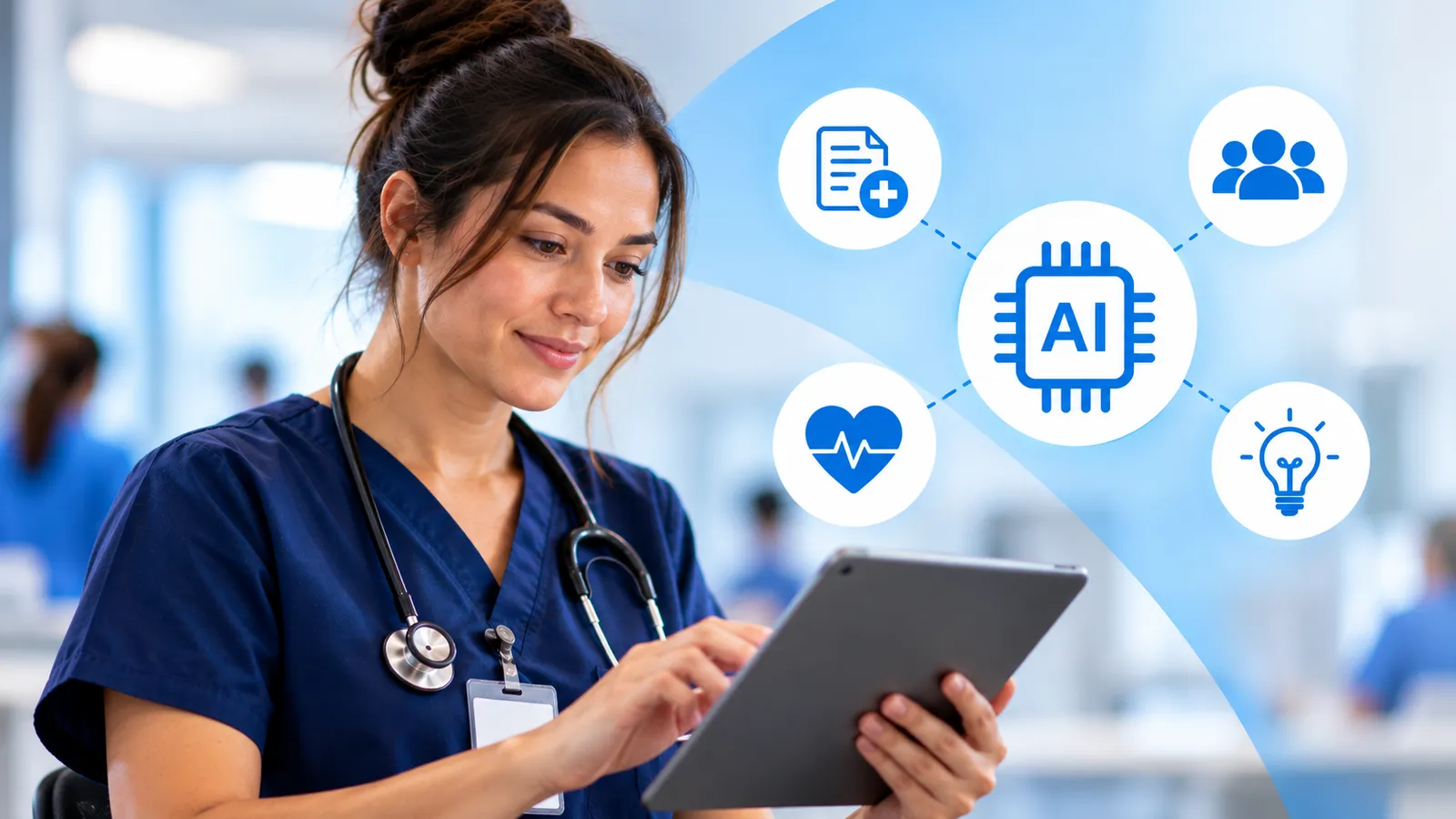
Artificial intelligence is becoming part of conversations about nearly every profession. For example, during my clinical rotations, I noticed that some hospitals were already piloting AI-powered triage systems, while others relied solely on traditional methods.
In healthcare, those conversations often focus on technology's ability to process information, support decisions, and improve efficiency.
But nursing raises a particularly important question.
What happens when an AI system suggests one course of action and a nurse's professional judgment suggests another?
That's one of the questions behind a new research initiative announced by the National Council of State Boards of Nursing (NCSBN).
On September 29, 2026, NCSBN announced that it is launching a survey examining nurses' experiences with artificial intelligence in clinical settings.
The research will be conducted in collaboration with nurse scientists from Duke University School of Nursing.
What is NCSBN studying?
The initiative will examine how nurses encounter and use AI in their clinical work.
Researchers plan to gather information from a random sample of nurses across the United States.
The survey will explore nurses' experiences with AI and identify potential gaps in their understanding of how the technology influences care.
A central focus is what happens when AI-generated information doesn't align with a nurse's clinical judgment, experience, or ethical considerations.
NCSBN says the findings will help inform nursing practice, regulatory considerations, workforce readiness, and continuing education.
The research is being launched now; the announcement does not report completed survey findings or establish new nursing requirements.
Why is this research important?
Nurses make decisions in environments where patient safety, professional accountability, and communication matter.
Technology can support those responsibilities, but it can also introduce new questions.
For example, nurses may encounter AI-generated information through clinical software, documentation tools, or systems that support healthcare decision-making.
Understanding where that information comes from and how it should be evaluated is important. In my experience, some nurses are cautious about accepting AI recommendations, preferring to double-check with colleagues or reference established guidelines.
The concern isn't simply whether nurses use AI.
It's whether they recognize when AI is influencing the information available to them and how they respond when its output conflicts with their professional assessment.
That's the issue highlighted by the researchers involved in the new NCSBN initiative.
AI doesn't eliminate the need for clinical judgment
One of the most important lessons for nursing students is that clinical judgment involves more than selecting an answer from a list.
It requires recognizing relevant information, considering a patient's condition, identifying priorities, and evaluating appropriate responses.
AI-generated information may become one input in a clinical environment.
But the existence of a recommendation doesn't automatically establish that the recommendation is appropriate for a particular patient.
The NCSBN research is interested in how nurses understand and navigate precisely that kind of tension.
For students, this is a useful reminder that strong clinical reasoning remains important even as healthcare technology changes.
What does this mean for NCLEX candidates?
It's important to distinguish industry research from official examination changes.
NCSBN's September announcement concerns nursing practice and research.
It does not announce a new NCLEX exam format, new AI testing domain, or immediate change to the NCLEX test plan.
Candidates should continue preparing according to the current official NCLEX materials.
That includes practicing clinical judgment, prioritization, safe care, and the application of nursing knowledge to patient situations.
The broader AI discussion can still be relevant to your professional development.
As healthcare settings adopt new technologies, understanding the relationship between clinical judgment and technology-supported information may become increasingly useful.
But candidates should not purchase new exam-preparation materials or alter their study plans based solely on this research announcement.
What could the research mean for nursing education?
NCSBN says the findings will help inform workforce readiness and continuing education related to safe and responsible AI use.
That creates several questions for nursing educators.
How should students learn to evaluate AI-generated information?
What should nurses understand about the limitations of technology-supported recommendations?
How can nursing programs reinforce accountability and ethical decision-making in increasingly digital environments?
Those are questions worth exploring.
However, it's too early to conclude what specific educational or regulatory changes may result from the research.
The purpose of collecting evidence is to better understand the situation before drawing conclusions.
What about nurses who don't use AI?
NCSBN says nurses selected to participate in the survey are encouraged to share their perspectives regardless of whether they currently use AI.
That matters because understanding the absence of AI use can be just as useful as understanding adoption.
Researchers may learn about differences in clinical environments, access to technology, training, or professional experiences.
The resulting information could help create a more complete picture of how AI is affecting nursing practice across different settings.
The bigger picture for healthcare careers
Healthcare professionals have always had to adapt to changing technologies. I remember a senior nurse telling me how challenging it was to switch from paper charts to electronic health records a decade ago.
Electronic health records, digital monitoring systems, and other clinical tools have altered how information is documented, communicated, and reviewed.
AI presents another development in that continuing evolution.
For nursing students and professionals, the goal shouldn't be to predict every technology they'll encounter.
It should be to develop the judgment, professional knowledge, and adaptability needed to evaluate new tools responsibly.
That means continuing to build strong foundations in patient safety, communication, ethics, and clinical reasoning.
What should nursing students take away?
NCSBN's new research initiative is worth following because it focuses on the relationship between technology and professional judgment.
It also shows why professional education doesn't end with graduation or licensure. I find that learning from peers and ongoing workshops is essential to keep up with both clinical and technological changes.
Nursing practice continues to evolve, and professionals need opportunities to learn from one another as new challenges emerge.
For students preparing for the NCLEX, the immediate priority remains understanding the current exam requirements and developing sound clinical judgment.
For practicing nurses, the research may help inform future conversations about training, oversight, and responsible technology use.
AI may change the information available to nurses. Understanding how to evaluate that information remains essential.
Latest NCLEX-RN discussion: Welcome to the NCLEX Community